Iranian Filmmaker Reflects on Making a Documentary About Pro-Palestinian Supporters
Iranian documentary filmmaker Mohsen Eslamzadeh discusses his experience making the six-part series The Dawn from the West and meeting European activists, artists and citizens who support Palestine.
Iranian documentary filmmaker Mohsen Eslamzadeh discusses his experience making the six-part series The Dawn from the West and meeting European activists, artists and citizens who support Palestine.
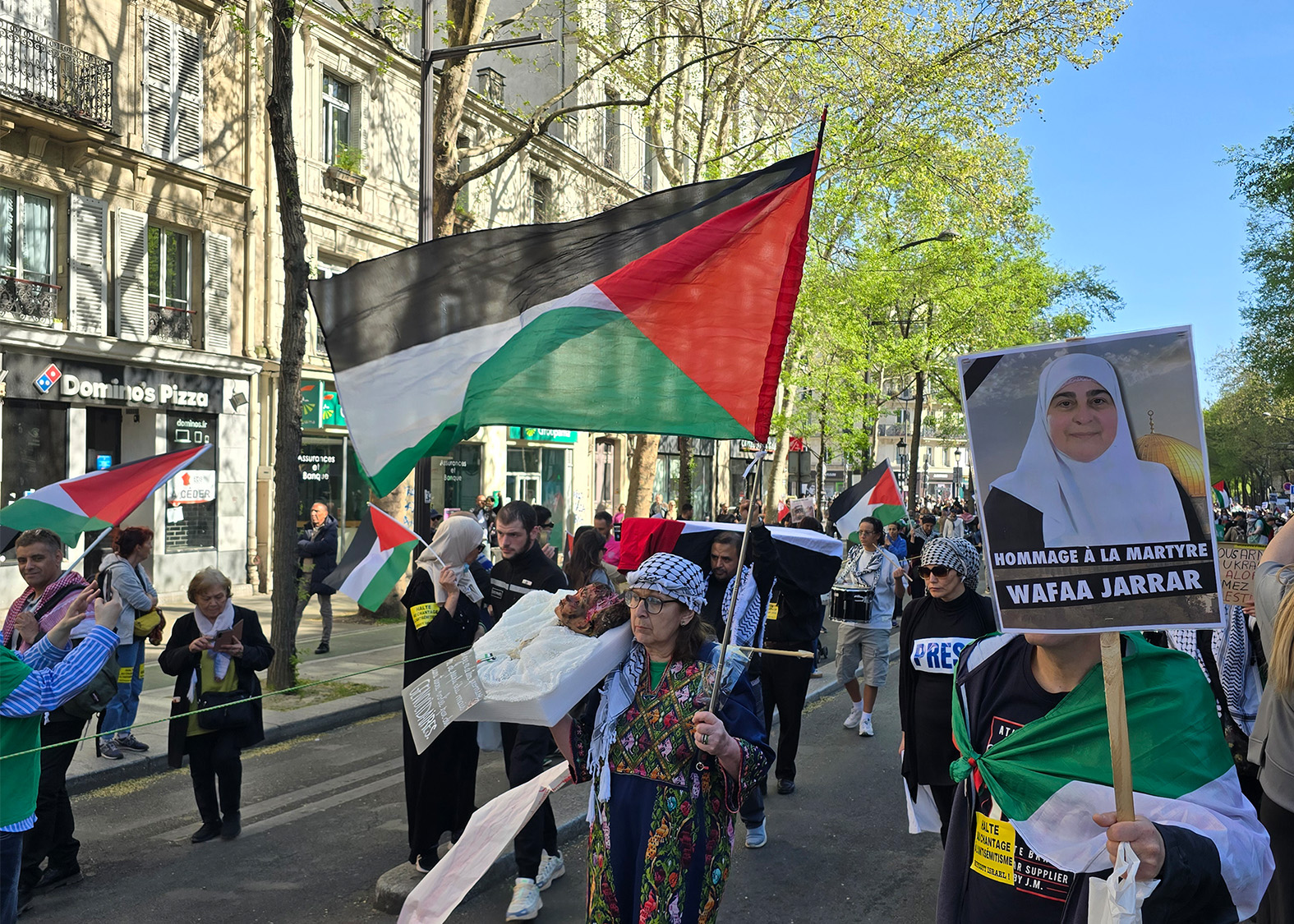
The six-part documentary series The Dawn from the West, directed and produced by Iranian filmmaker Mohsen Eslamzadeh, explores the involvement of sections of European public opinion and civil society in support of Palestinians following the start of the war in Gaza. By following the activities of citizens and activists in several European countries, the series seeks to examine what motivates them to take part in protests and other forms of support for Palestine.
The filmmaker initially planned to build the documentary around the lives and views of two figures: Professor Christophe Orlain, a French surgeon, and Esther, a Dutch activist associated with the anti-Zionist movement. But after arriving in Paris and meeting other figures, including Olivia Zémor, a Jewish activist opposed to Zionism; Belgian journalist and writer Michel Collon, founder of the independent Investig’Action platform; and French comedian Dieudonné, the project took a different direction.
According to Eslamzadeh, the film consequently moved beyond its original focus on two individuals and developed into a six-part series featuring a broader range of personalities and experiences.
From Paris to Amsterdam: Seeking European Voices for Palestine
The production team traveled to Switzerland, France, Belgium and the Netherlands. According to the director, a two-week visa restriction prevented the team from traveling to countries such as Germany.
Paris was one of the main filming locations. Eslamzadeh says the city was hosting numerous rallies and protest events in support of Palestine. The team then traveled to Brussels to follow Michel Collon’s activities and, in the Netherlands, encountered nongovernmental organizations involved in supporting Palestinians.
From the filmmakers’ perspective, these activities extended well beyond street demonstrations.
From Street Protests to Protest Art
Eslamzadeh says demonstrations were a constant feature of pro-Palestinian activism in the countries covered by the documentary, but what particularly caught his attention was the use of art to convey political and humanitarian messages.
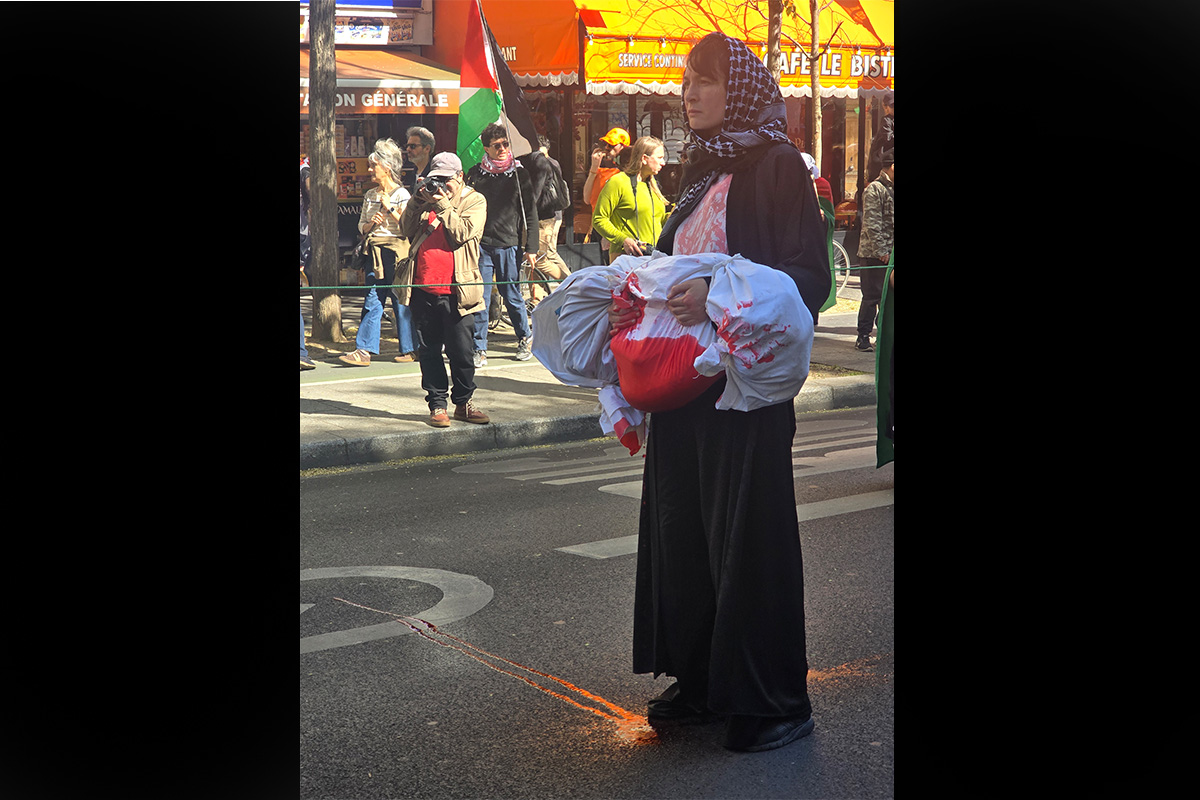
According to the filmmaker, street theater groups staged scenes depicting wounded people and grieving mothers, while musical groups performed at events in different cities focusing on Palestine.
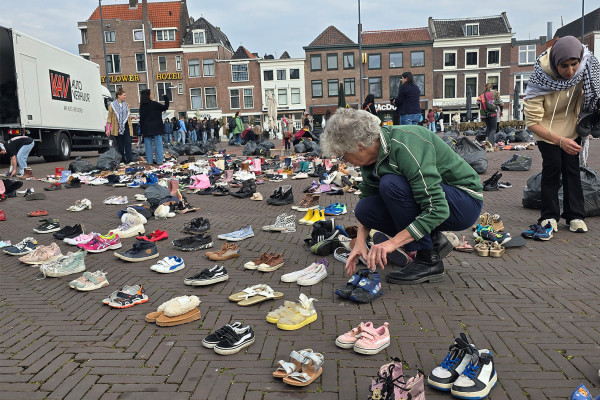
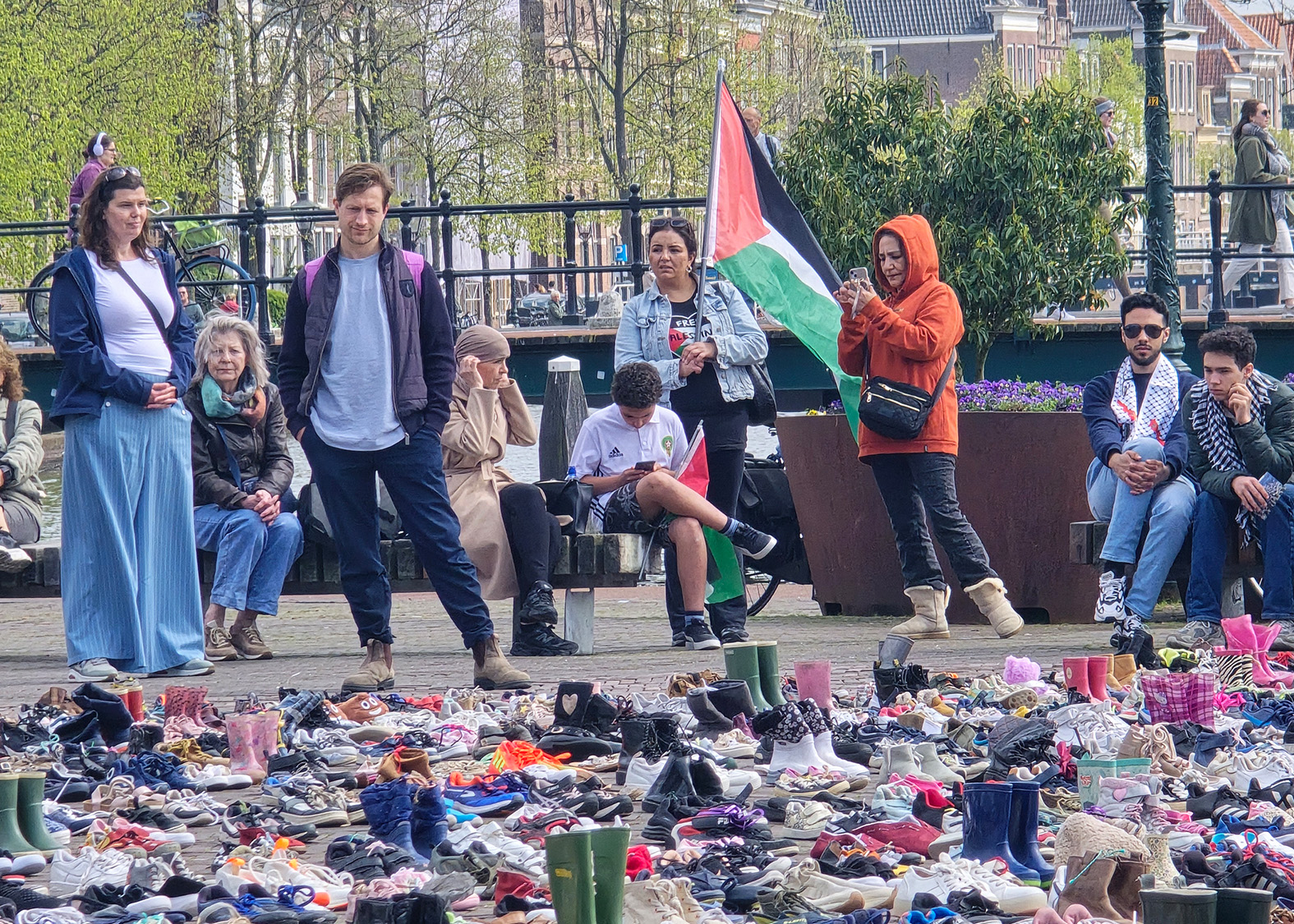
He also recalls a group in the Netherlands that commemorated children killed in Gaza by placing children’s shoes in major city squares and reading out the names and ages of the victims.
The experience, the filmmaker says, had a particular impact on him:
“When the number of victims reaches the thousands, the figure becomes abstract to us. But seeing a child’s shoes, name and age turns that number into something human and tangible.”
He also points to a group called Plant an Olive Tree, which planted olive trees in Palestinian areas, documented the details of each tree and used legal mechanisms to challenge the seizure of land.
Simon: The 79-Year-Old Who Cycled 14 Kilometers Every Day
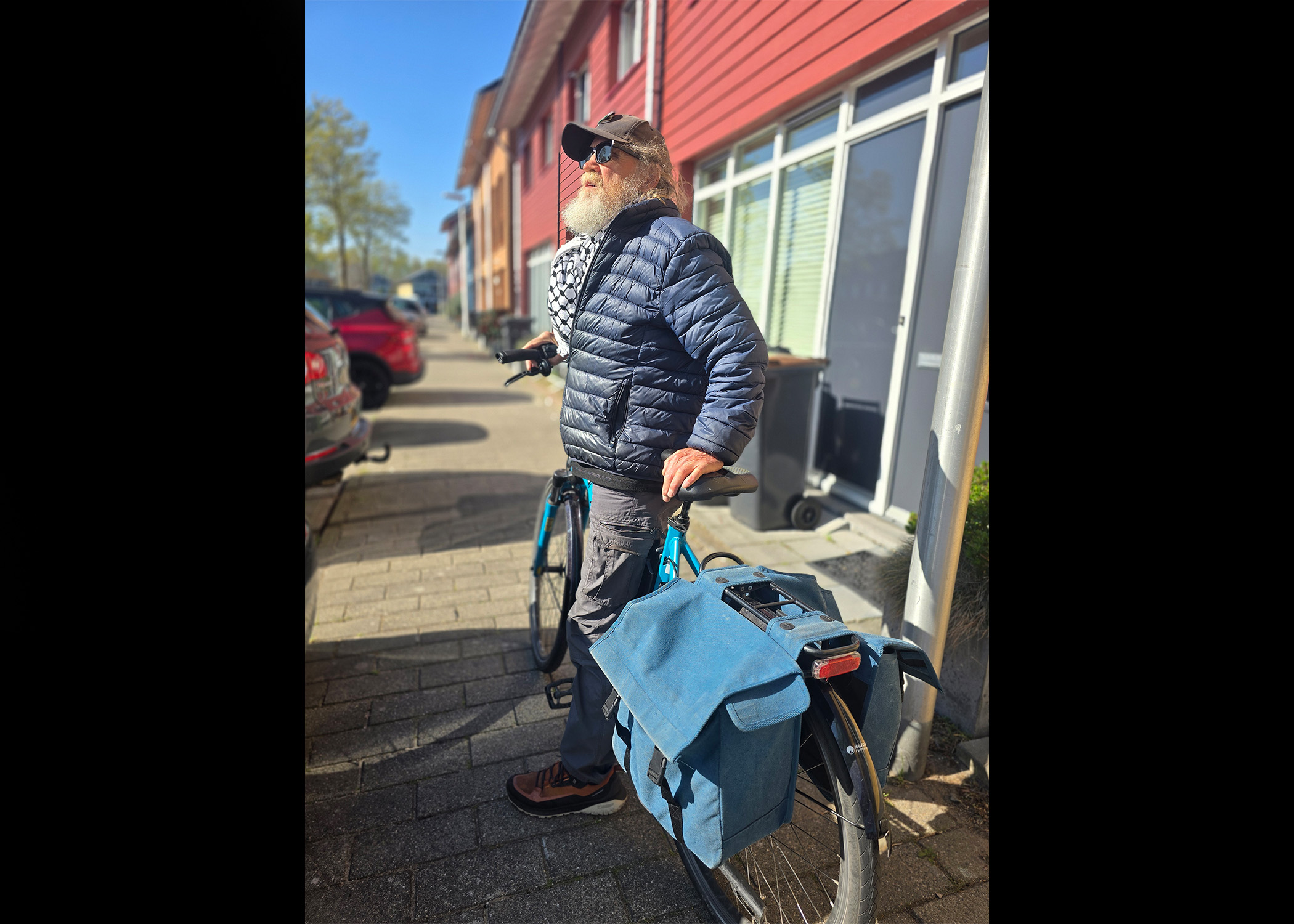
One of the people who particularly caught the director’s attention during production was Simon, a 79-year-old Dutch citizen who campaigned for Palestine in Amsterdam’s Dam Square.
According to Eslamzadeh, Simon had organized an exhibition criticizing Israel and had previously experienced harassment. He cycled about 14 kilometers to Dam Square every day to raise money for Palestinians in need.
The encounter prompted a broader ethical question for the filmmaker:
“If one day we have to answer for the suffering of the Palestinian people, what will we say in front of someone like this? Have we been willing to pay even a small price to support an oppressed people?”
Moving Away from a Promotional Format
The director stresses that The Dawn from the West was not intended to be a collection of news reports about protests in Europe. He sees the distinction between documentary filmmaking and news reporting in the documentary’s closer engagement with its subjects and in the filmmakers’ presence within their everyday environments.
According to Eslamzadeh, the team sought to avoid presenting a predetermined narrative and instead allowed the subjects and their motivations to emerge through the camera, giving viewers the opportunity to draw their own conclusions about the reasons behind their actions.
Technically, the documentary relies primarily on footage recorded during the journey and direct interviews, with only limited use of archival material. Its storytelling also relies more heavily on observation and conversation than on explanatory narration.
Pressure and Restrictions on Some Pro-Palestinian Activists
According to Eslamzadeh, the filming team encountered an atmosphere of pressure and security concerns during its travels, although he says none of the crew members experienced any direct incident.
He claims that after the team returned to Iran, one of the people featured in the documentary was visited by security personnel. He also refers to the situation of French comedian Dieudonné, saying that he has faced surveillance and restrictions on his movements.
The filmmaker also describes what he says are restrictions faced by some pro-Palestinian activists in Europe, including limitations affecting access to banking services, work permits and certain everyday services.
Palestine from a Different Perspective
Eslamzadeh says one of the ways The Dawn from the West differs from many documentaries made about Gaza and Palestine is its perspective:
“This time, the resistance and Palestine are being portrayed from a different setting and through the voices of people who live in Europe.”
He also recalls speaking with Alain Corvez, a retired French army colonel, whom he says had described Iran as a regional power before the 12-day Iran-Israel war.
The filmmaker also discusses Olivia Zémor and her cultural center and library in Paris, saying that following October 7, the center suspended some of its regular programming and moved activities related to Palestine into public spaces and onto the streets.
He also refers to a French publisher who, he says, personally financed the publication of a book by the late leader of the Islamic Republic of Iran, Ayatollah Seyyed Ali Khamenei. According to Eslamzadeh, the publisher believed European readers wanted to learn more about the cleric and his views on the United States and Israel.
From Gaza to a Shared Human Language
Eslamzadeh believes the Gaza war has transformed the Palestinian issue, for parts of Western public opinion, from a matter seen primarily through a political and regional lens into a humanitarian concern.
He says images and reports of Palestinian civilian suffering have led some people to question why the international community and human rights organizations have not responded sufficiently to the situation.
According to the filmmaker, this has brought together people of different nationalities and religious backgrounds in support of Palestine:
“This is an example of how a human truth can transcend religious and cultural boundaries.”
He says the same trend can be seen in the media and arts, claiming that around 350 works about Palestine have been produced since the October 7, 2023 attack, which Hamas calls Operation Al-Aqsa Flood. He also points to the broadcast of some works related to the Palestinian resistance on television networks in China and South Korea.
Eslamzadeh also mentions Palestinian filmmaker Rashid Masharawi, who has spoken about efforts by children in Gaza to make films amid the war.
Stories Yet to Be Told
According to the filmmaker, there are still numerous subjects related to support for Palestine in Europe and the United States that could become the focus of future documentaries. These include athletes who refuse to compete against Israeli athletes and anti-war activists who, he says, have faced restrictions because of their activities.
A Collaboration Between Two Iranian Cultural and Media Organizations
The Dawn from the West is a joint production of the Nehzat Arts and Media Center and the Shahid Avini Institute for Cultural and Artistic Thought.
The Nehzat Arts and Media Center is an institution affiliated with Iran’s Islamic Propaganda Organization and works on the production of artistic and media content, including documentaries, short films and television programs.
The Martyr Avini Institute for Cultural and Artistic Thought is an Iranian cultural and artistic production organization involved in film and media projects.
Eslamzadeh says the production team sought to keep costs as low as possible, from securing inexpensive tickets and accommodation to carrying its own filming and lighting equipment and conducting numerous interviews during the trip.
The Dawn from the West Heads for Television and International Distribution
According to the director and producer, the series is scheduled to be broadcast on television in Persian, Arabic, Urdu and English, before being made available through various social media platforms.
Ultimately, The Dawn from the West offers a portrait of part of the pro-Palestinian activism taking place across Europe. According to its makers, the documentary focuses not on the official positions of European governments, but on the experiences and motivations of citizens and activists who have entered the public arena in support of Palestine.
1405/07/15