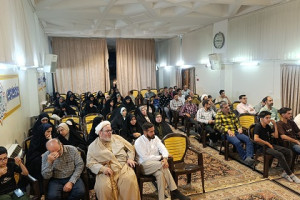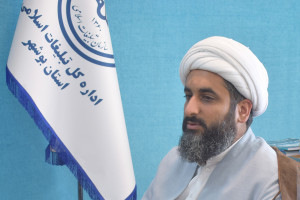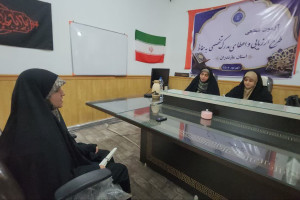
حوزه هنری | در پی حادثه تلخ رانندگی در مسیر بازگشت از استان گلستان؛
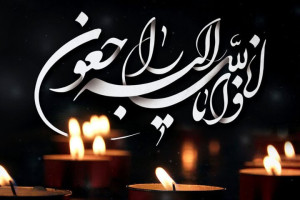
حوزه هنری درگذشت سه خادم فرهنگ و هنر شاهرود را تسلیت گفت
On Iran’s Persian Gulf Coast, a Celebration of Shia-Sunni Unity
A family celebration on Iran’s Persian Gulf coast combined local culture and religious unity with memories of children and sailors killed in the recent conflict.
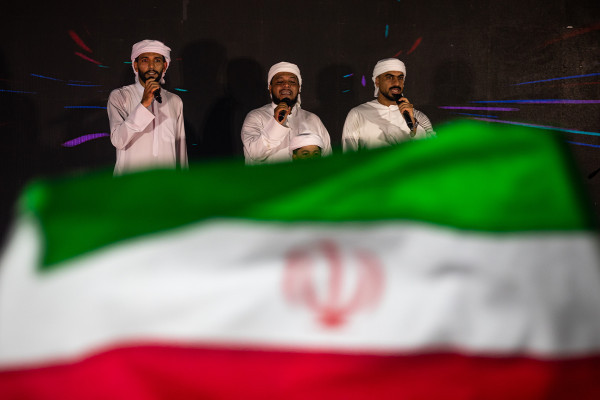
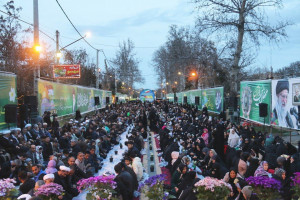
The large family celebration known as Ummah of Ahmad was held on Saturday, August 29, 2026, at Ghadir Park in Bandar Abbas, drawing a large crowd of local residents. The public celebration marked the birthday of the Prophet Muhammad.
Bandar Abbas, the capital of Hormozgan Province, lies in southern Iran on the northern coast of the Persian Gulf, near the Strait of Hormuz.
Hormozgan is one of Iran’s regions where Shia and Sunni Muslims live alongside one another, alongside communities with different ethnic and linguistic backgrounds. Ummah of Ahmad was intended to bring that coexistence into a shared public and family setting. The name “Ahmad” is one of the names traditionally used for the Prophet Muhammad.
Locals call the seaside venue “Under the Flag,” after the large flag flying above it. That night, however, “Under the Flag” was more than simply the name of a place. Families from different religious, ethnic and linguistic backgrounds had gathered side by side.
Just months earlier, the same region had witnessed very different scenes. Bandar Abbas, Minab, Qeshm, Sirik, Jask and the Strait of Hormuz had come under U.S. attacks during the recent war. In Minab, the Shajareh Tayebeh School was destroyed, killing 168 children. The Dena, an Iranian Navy destroyer, was also attacked, killing 104 members of its crew.
A Celebration Rooted in the Culture of the South
Three presenters worked to keep the atmosphere upbeat. Jokes and southern Iranian songs filled the air, while the cultural character of the region was evident from the opening moments of the event.
In Bandar Abbas, Ummah of Ahmad was infused with the culture of southern Iran: local music and dress, falafel—a popular southern Iranian dish made from chickpeas—and tomoushi, a thin traditional flatbread from the south.
Children moved through the crowd, costumed characters posed for photographs with families, and mokebs—community-run food and hospitality stations—continued serving food to attendees.
A few meters away, an Islamic Revolutionary Guard Corps speedboat and a drone were also on display, presented as symbols of the role played by Iranian forces in the war. Their presence alongside music and children’s activities created a striking contrast within the celebration.
Where Unity Is Part of Everyday Life
Sunni-Shia unity was at the heart of the program, but it was not reduced to a few ceremonial remarks.
One of the presenters spoke about Iran’s different religious communities, dialects and ethnic groups:
“This unity among Iran’s religions, skin colors, dialects and ethnic groups—with the people of Bandar Abbas as an example—is something that in many countries around the world is more of a dream than a reality.”
In Hormozgan, Shia and Sunni Muslims live alongside one another, while Persian, Arab and Baluch communities are also present. In that context, the Prophet Muhammad’s birthday offered the audience an opportunity to emphasize what Muslims share in common.
A Survivor’s Story Breaks the Celebration’s Rhythm
Amid the festive atmosphere, one of the children who survived the attack on Shajareh Tayebeh School in Minab appeared on stage with her mother.
The child spoke about the explosion, the collapse of the school building and the hours she spent trapped beneath the rubble. Her mother recalled the moment when she did not know whether her daughter was alive:
“I didn’t know whether my child was alive. I couldn’t even get into the school. I was under so much psychological pressure that I had even forgotten my phone password.”
For a few moments, the seaside fell silent.
The celebration did not turn into a memorial service, but the victims of the war were not forgotten amid the music and laughter.
232 Days of Waiting—and Then an Empty Place at Home
After that, Akram Alipour, the wife of Mehdi Habibzadeh, one of the sailors killed aboard the Dena, came onto the stage with her two daughters, Roxana and Samin.
Mehdi Habibzadeh had been part of Iran’s 86th Naval Flotilla, whose mission took the Dena destroyer and the Makran forward base ship on an eight-month voyage around the world under the Iranian flag.
Makran, a historic coastal region in southeastern Iran along the Gulf of Oman, gave its name to the vessel. During the mission, the Makran served as a support vessel and mobile naval base accompanying the Dena.
For his wife and two daughters, the eight-month mission became 232 days of waiting.
The Dena eventually returned to Bandar Abbas. But during the war that began on February 28, 2026, with U.S. and Israeli attacks on Iran, the destroyer came under attack. This time, Mehdi did not return home.
His wife spoke about the day she learned of his death, but stressed that she did not want grief to bring her children’s lives to a halt: “My role is to raise my children in a way that allows them to follow in their father’s footsteps.”
And this part of the evening did not end with mourning, as might have been expected. Instead, it ended with Samin’s birthday, celebrated in the presence of the crowd.
In one hand, she held her birthday cake and a gift; in the other, a red Ya Latharat al-Husayn flag—a flag that, in the context of the event, symbolized the desire to avenge the slain and remember those killed in the war.
“Khoonkhah”: A Song About Vengeance for the Slain
Next came Mojal, the Iranian rapper performing at the event. Speaking about his new track, he said that Muslims have generally emphasized the Prophet’s mercy and compassion when introducing him, while paying less attention to the Quranic phrase “Ashidda’u ‘ala al-kuffar”— (firm against the disbelievers) a phrase that, in his remarks, emphasized the steadfastness of believers in confronting their enemies.
He then performed “Khoonkhah” (“Avenger of the Slain”) for the first time, a song built around the phrase “Ashidda’u ‘ala al-kuffar.”
“This Sea Has an Owner”
He was followed on stage by a commander from Iran’s naval and Strait of Hormuz forces.
He dismissed U.S. claims about keeping the waterway open as “a great American lie” and said that as long as the people remained present in the field, Iranian forces would not allow the United States to regain control of the region.
He then said:
“In the south, we have the Portuguese cemetery, and in Bushehr, we have the British cemetery. Today, too, if the Americans make another foolish move, we are ready to turn the Persian Gulf into the world’s largest graveyard for American military personnel.”
Around the celebration, the crowd was so large that finding a parking space had become difficult. Families had gathered along the same shoreline that, only months earlier, had been caught up in war.
The school in Minab had been attacked, but one of its surviving children was standing on stage, telling her story.
The Dena had been attacked, but the daughter of one of its fallen crew members stood among the cheering crowd, a birthday cake in one hand and a red flag symbolizing vengeance for the slain in the other.
Late into the evening, music once again rose from the shoreline. Children returned to their games, while the mokebs remained open.
Across from them was the sea—the same sea that, only months earlier, had been a theater of war and now carried the sound of music and laughter from the shore.
That night, the people of Bandar Abbas had chosen to celebrate right there.
1405/06/14
به روز رسانی : 1405/06/14


T
T