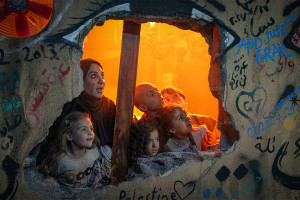
Iranian cinema brings the experiences of children caught up in war to the screen.
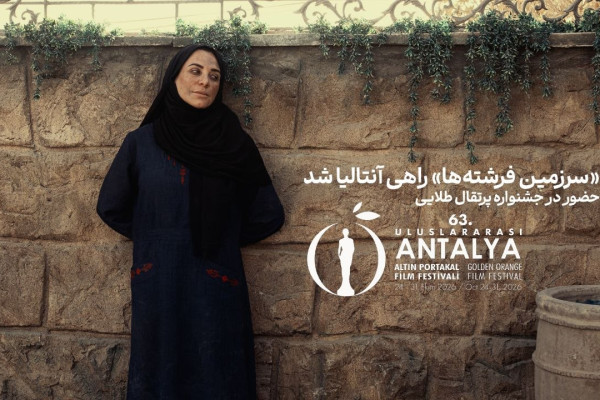
Iranian Film on Gaza’s Children to Screen at Antalya Golden Orange Film Festival
From AP to Al Jazeera:
The “Janfada-ye Iran” rally in Tehran on Friday, September 18, drew widespread international media attention after Iranian authorities put the turnout at 313,000. Coverage by major outlets focused on the scale of the gathering, the organization of volunteer forces, participants’ stated readiness to receive training and defend the country, and the display of Iranian military equipment.
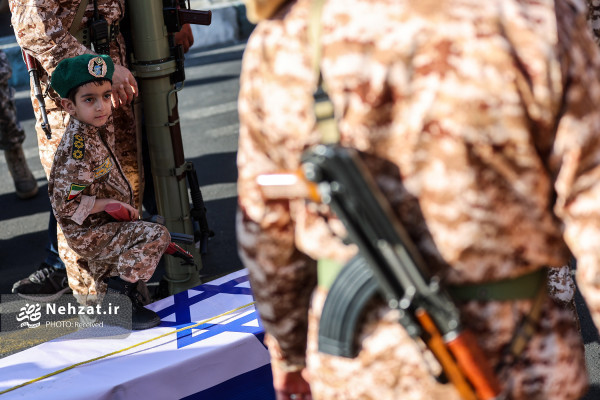
The “Janfada-ye Iran” rally in Tehran on Friday, September 18, drew widespread international media attention after Iranian authorities put the turnout at 313,000. Coverage by major outlets focused on the scale of the gathering, the organization of volunteer forces, participants’ stated readiness to receive training and defend the country, and the display of Iranian military equipment.
The rally was held along a major route from Imam Hussein Square to Enghelab Square, one of Tehran’s main public gathering areas. The route has previously hosted major public gatherings and demonstrations.
Participants carried Iranian flags, while some wore military-style uniforms. Drones and air-defense systems were also displayed during the event, which included women, young people and veterans of the Iran-Iraq War.
What is “Janfada-ye Iran”?
“Janfada-ye Iran,” roughly meaning “those who sacrifice their lives for Iran,” is a campaign to recruit and train volunteers. Iranian officials have described it as covering areas including defense, emergency response and other forms of national service. The campaign is linked to the Basij Organization, a volunteer paramilitary force affiliated with Iran’s Islamic Revolutionary Guard Corps (IRGC).
The IRGC, commonly known as the Revolutionary Guard, is one of Iran’s two principal military institutions alongside the regular army. It has responsibilities ranging from national defense and security to protecting the Islamic Republic.
The Basij Organization is a volunteer paramilitary force affiliated with the IRGC. It operates in both military and non-military spheres, including social activities and the mobilization of volunteers.
Al Jazeera reported that more than 600,000 people had registered for the active component of the campaign, while Iranian officials said they expected more than one million people to undergo training. These figures refer to registration in the broader campaign and should not be confused with the separate figure announced for attendance at the Tehran rally.
Why 313?
Iranian authorities put the number of participants in Friday’s Tehran rally at 313,000, a figure that could not be independently verified. Al Jazeera likewise said it could not independently confirm the attendance figure.
The number 313 carries religious and historical significance in Iran. Iranian state-affiliated reporting has linked the figure to the Battle of Badr in 624 CE, the first major battle of the early Muslim community. The number therefore has symbolic significance within Iran’s religious culture.
Separately, Hassan Hassanzadeh, commander of the Greater Tehran IRGC, said before the event that around 500,000 people had registered to take part in the Tehran rally. That figure refers to registrations for the event and differs from the 313,000 attendance figure announced by Iranian authorities.
What did international media highlight?
The Associated Press, in a report also carried by The Washington Post and the Los Angeles Times, described the gathering as the biggest government-organized demonstration of its kind since the war began. Its coverage focused on participants’ stated readiness to receive military training and take up arms, the presence of people in military-style clothing, and the display of drones and air-defense equipment.
The AP report also cited more than 600,000 registrations for the Janfada-ye Iran campaign and Iranian officials’ expectation that more than one million people would eventually receive training. Those figures were attributed to Iranian officials and could not be independently verified.
Al Jazeera likewise focused on the large turnout in central Tehran, the presence of volunteers in military-style uniforms, the display of drones and air-defense systems, and the participation of women and young people. It also placed the rally within the broader effort by Iranian authorities to organize and train volunteer forces.
The Times of Israel, citing the AP report, also highlighted the large turnout and participants’ stated readiness to receive training and defend the country, along with the display of military equipment and anti-American and anti-Israeli slogans.
One event, several news angles
Across the international coverage, three themes stood out: the scale of the gathering, the organization and training of volunteer forces, and the display of Iranian military equipment.
Reports and images also highlighted the participation of women and young people, military personnel and volunteers, Iranian flags, and anti-American and anti-Israeli slogans.
For international media, the significance of the rally went beyond the number of people on the streets. The event came as the “Janfada-ye Iran” campaign was moving from a registration drive toward the organization and training of volunteer groups. As a result, coverage focused not only on the rally itself but also on registration figures and the authorities’ plans to expand
The reported turnout of 313,000, like the larger registration figures associated with the campaign, was announced by Iranian authorities and could not be independently verified.
2026-09-22


T
T