An Overview of the Educational Model of Iran’s Sadra Schools
Sadra Schools؛ Education and Student Life in Iran
Street Art and Political Messaging in Tehran
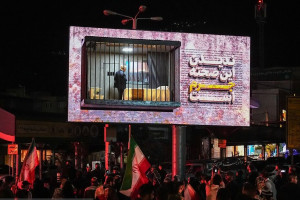
A three-dimensional installation resembling a prison cell in Tehran’s Tajrish Square has drawn the attention of passersby. Inside the structure, a figure in a dark suit and red tie, with a face resembling Donald Trump, moves around, grips the bars and occasionally sits on a bed. Passersby have stopped to photograph and film the scene, while some have made jokes or comments about it. Installed on October 21, 2026, the work quickly attracted media attention.
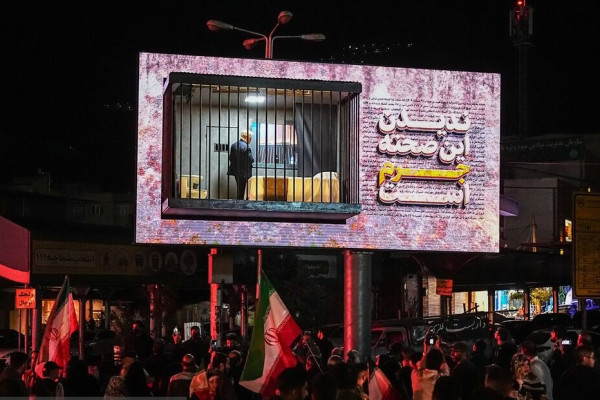
A three-dimensional installation resembling a prison cell in Tehran’s Tajrish Square has drawn the attention of passersby. Inside the structure, a figure in a dark suit and red tie, with a face resembling Donald Trump, moves around, grips the bars and occasionally sits on a bed. Passersby have stopped to photograph and film the scene, while some have made jokes or comments about it. Installed on October 21, 2026, the work quickly attracted media attention.
The Street: A Gallery Without an Admission Fee
Street art can turn public spaces into platforms for social and political expression. Unlike visitors to conventional galleries, its audience is made up of people who encounter the work in the course of their daily lives.
In this case, the figure resembling Trump, placed inside a prison-cell-like structure, offered a symbolic depiction of the US president. Some passersby photographed or filmed the installation, while others reacted with jokes and comments. One man joked about paying bail for the figure; a teenager shouted a threat directed at Trump. These were individual reactions at the scene, rather than evidence of how Tehran’s residents as a whole viewed the installation.
When Protest Takes Visual Form
In recent years, murals and symbolic installations addressing the United States and Israel have become visible features of Tehran’s urban landscape. Through recognizable figures, visual symbols and brief slogans, these works bring political messages into public spaces.
One occasion associated with such displays is November 4, known in Iran as 13 Aban. The date marks the 1979 seizure of the US Embassy in Tehran by a group of Iranian students. The students were protesting Washington’s decision to admit the deposed Shah, Mohammad Reza Pahlavi, to the United States for medical treatment. They feared that the move could pave the way for his return to power with US support and another American intervention in Iran. The embassy seizure became a turning point in relations between Iran and the United States after the 1979 Revolution.
On November 4, 2025, symbolic figures of Donald Trump and Israeli Prime Minister Benjamin Netanyahu were displayed in Tehran in a scene designed to suggest that they had been hanged. Images of the display were covered by international media.
Following the outbreak of the war involving Iran, the United States and Israel in February 2026, anti-US and anti-Israel imagery and slogans became more prominent in Tehran. In July 2026, a mural in Enghelab Square depicted Trump in a black coffin, using symbols associated with death and revenge.
Enghelab Square, in central Tehran near the University of Tehran, is a prominent public space known for political gatherings and messages. Its murals are visible to large numbers of people who pass through the area.
On August 31, 2026, another mural was unveiled in Jomhouri Square, bearing the slogan: “It’s no magic trick: blink, and you’re gone!” The square is another busy public space in central Tehran. The slogan has the tone of a warning, although its precise intended meaning depends on the creators’ interpretation.
A further mural appeared in Enghelab Square on October 7, 2026, marking the anniversary of the Al-Aqsa Flood operation. The term “Al-Aqsa Flood” is the name used by Hamas for the October 7, 2023 attack it led against Israel, which involved rocket fire and armed militants entering Israeli territory.
The mural, bearing the slogan “Increasingly Isolated,” showed Netanyahu facing a row of empty seats at the United Nations. The image presented the artists’ view of Israel’s growing international isolation. Al Jazeera also covered the mural.
From Tehran’s Streets to International Media
The Tajrish installation also attracted attention beyond Iran. On October 22, 2026, its images were covered by Agence France-Presse (AFP), The Times of Israel, Arab News and Dawn. Euronews Persian published a report that day titled “Trump Behind Prison Bars in Tajrish Square: What Do People Say?” The Guardian had also referred to the installation in a photo feature published on October 21.
Farzaneh Arabzadeh, 30, who was at the scene, said that Trump had claimed at the beginning of the war that he intended to help the Iranian people. In her view, however, their situation had become worse. She said she hoped to see a similar scene become reality one day.
According to Euronews Persian, some social media users described the installation as “strange,” while others criticized it. The reactions reflected differing responses among viewers.
International media coverage does not necessarily mean that all audiences agree with the message conveyed by the installation. It does, however, show how an image placed in a public space can travel beyond the site where it was displayed and become part of a wider media discussion.
A City That Speaks Through Its Images
The installation in Tajrish is one example of how street art is used to communicate political messages in Tehran. Its recognizable subject and symbolic setting attracted the attention of passersby and international media alike.
In a city where murals, slogans and symbolic installations form part of the public landscape, such works can reflect the political positions of their creators. Assessing their broader effect on public opinion, however, requires distinguishing between the message intended by the artists, the reactions of individuals who encounter the work, and the views of the wider public.
2026-11-01


T
T